

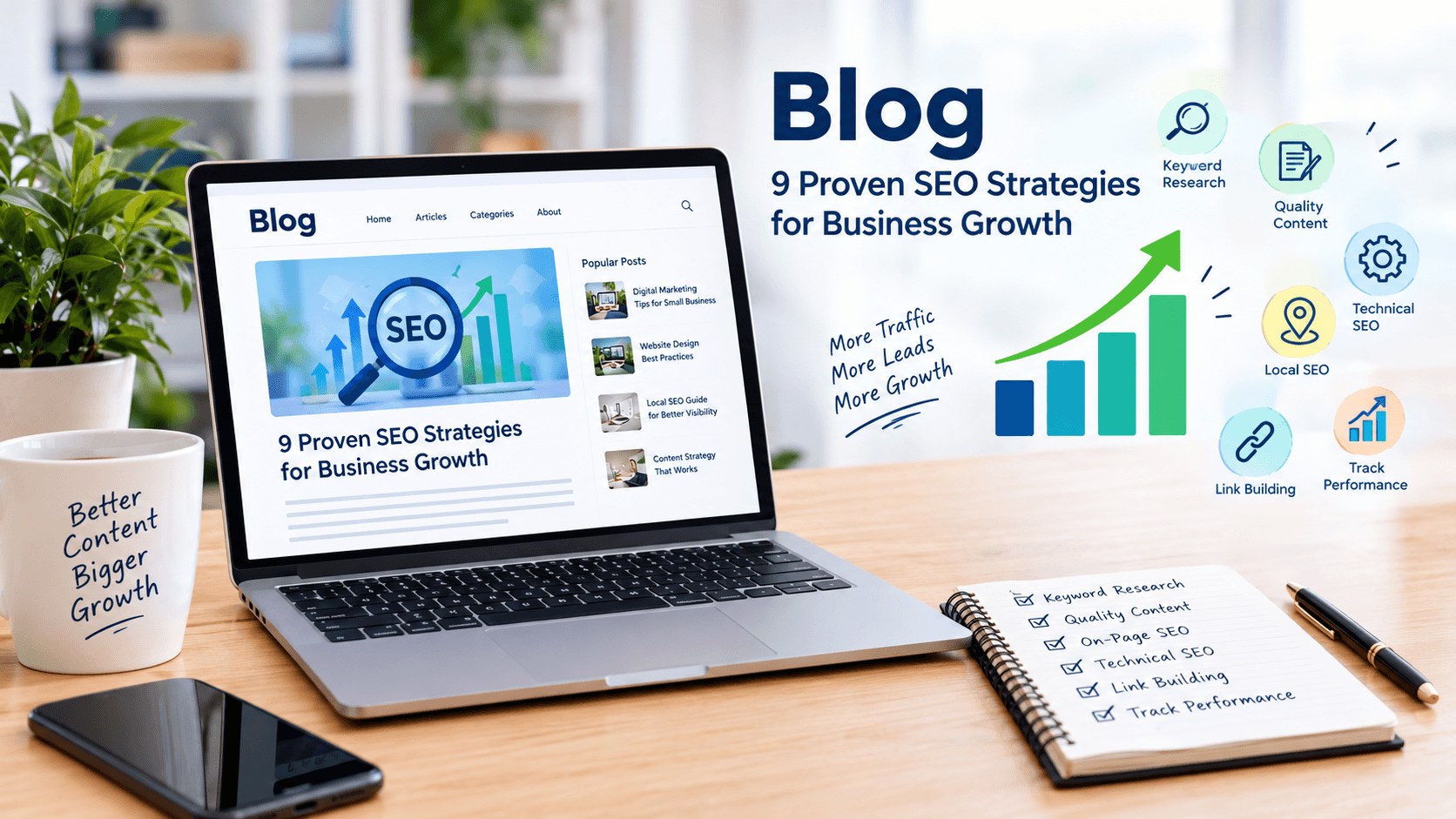
Blog: 9 Proven SEO Strategies for Business Growth
Blog content can help businesses improve online visibility, answer customer questions and attract relevant visitors. A well-planned blog also gives businesses an opportunity to demonstrate expertise, explain their services and build trust with potential customers. When combined with effective search engine optimisation (SEO), useful content can support long-term digital growth.
For startups, local businesses, law firms, healthcare providers, ecommerce brands and service companies, a blog can become an important part of a wider digital marketing strategy. The key is to publish helpful information that meets customer needs instead of creating articles simply to fill a website.
In this guide, AI POTLINE explains nine practical SEO strategies to help businesses improve their websites, develop useful blog content and create more opportunities to generate qualified enquiries.
What Is a Blog and Why Does It Matter for SEO?
A blog is a section of a website where businesses publish articles, guides, updates and educational resources. These articles can answer common questions, explain industry topics and help readers understand products or services.
From an SEO perspective, a useful blog can help search engines discover relevant information about a business. It can also provide opportunities to target informational search queries, connect related website pages and guide readers towards relevant services.
However, publishing more articles does not automatically improve search rankings. Each blog post should serve a clear purpose, provide original value and meet the needs of its intended audience.
A successful content strategy focuses on relevance, accuracy, readability and a positive user experience.
Why Should Businesses Invest in a Blog?
A business blog can support several marketing goals. It can introduce a company to people researching a problem, provide useful answers before a purchase and help existing customers understand available services.
Helpful articles can also support internal linking by connecting educational resources with relevant service pages. For example, someone reading about digital marketing may want to learn more about a company’s professional services.
The value of a blog depends on content quality, audience relevance, competition and the effectiveness of the wider website. Businesses should measure meaningful outcomes such as qualified enquiries, conversions and engagement rather than relying on traffic alone.
1. Choose Relevant Keywords for Every Blog Post
Keyword research helps businesses understand what their audience searches for online. Before creating a blog post, identify the topic, the intended reader and the question the article should answer.
Search terms can reflect different intentions. Informational queries seek explanations, commercial queries compare available options, and transactional queries suggest that someone is ready to take action.
For example, a business might create educational content about SEO basics while maintaining a separate service page for people searching for professional SEO assistance.
Choose one primary focus keyword for each important page. Include relevant phrases naturally in the title, introduction, headings and body where they make sense.
The focus keyword for this article is blog. Because the term is broad, the surrounding content also explains SEO strategy, content creation and business growth to make the page useful to readers.
Avoid keyword stuffing. A blog should read naturally and answer the reader’s question clearly.
2. Create Helpful Blog Content That Answers Questions
Useful content is the foundation of a successful blog. Before writing an article, consider the questions customers ask when researching a product, choosing a service or trying to solve a problem.
Develop topics around real customer needs. A business blog might include practical guides, industry explanations, service comparisons, tutorials and frequently asked questions.
Answer the main question near the beginning of each article. Follow the opening with clear explanations, examples and practical recommendations. Use descriptive headings to help readers find the information they need.
Review existing blog posts regularly. Update outdated information, improve unclear sections and remove unnecessary repetition. Add new details when they genuinely help readers understand the topic.
The goal is to create content that deserves the reader’s attention. A helpful blog can build credibility over time by consistently providing accurate, relevant information.
3. Optimise Blog Titles, Descriptions and Headings
On-page SEO helps search engines and visitors understand what a page covers. Each blog post should have a descriptive title, a useful meta description and a clear heading structure.
The SEO title should communicate the topic accurately and encourage relevant users to visit. The meta description should summarise the article without making unsupported promises.
Use one clear H1 heading for the main article title. Organise the remaining content with descriptive H2 and H3 headings where appropriate.
Keep URLs readable and consistent. Add meaningful alternative text to informative images, and use internal links to connect readers with related articles or services.
WordPress users can use Rank Math to review these elements before publishing. Its checks can help identify missing details, but a high plugin score does not guarantee search rankings.
For this page, the focus keyword blog should appear naturally in the SEO title, meta description, URL where applicable, introduction and relevant sections.
4. Improve Technical SEO and Website Performance
A useful blog needs a website that search engines can crawl and visitors can use comfortably. Technical SEO helps ensure that important pages are accessible, indexable and correctly configured.
Check for broken links, redirect chains, duplicate pages, incorrect canonical tags and accidental noindex settings. Make sure important pages return the appropriate HTTP status and appear in the website’s XML sitemap when they should be indexed.
Website performance also affects the user experience. Compress large images, remove unnecessary plugins, use appropriate caching and test important pages on mobile devices.
Monitor Core Web Vitals to understand loading performance, responsiveness and visual stability. These checks can reveal issues that make a website frustrating to use.
Technical improvements do not guarantee rankings, but they help create a stronger foundation for useful blog content and other important website pages.
5. Use Local SEO to Reach Nearby Customers
Local SEO helps businesses become more visible to people searching for relevant services in specific areas. It is especially important for businesses that serve customers at a physical location or within defined service areas.
Maintain an accurate Google Business Profile where eligible. Keep business details, telephone numbers, opening hours and service information up to date.
Encourage genuine customer reviews and respond professionally to feedback. Make sure important business listings contain accurate contact information.
A local blog can also answer questions relevant to the communities a business serves. However, location-specific articles should contain genuinely useful local information rather than repeating nearly identical content with different place names.
Local SEO works best when website content, business listings and the actual customer experience accurately reflect the services offered.
6. Connect Blog Content With Website Design and Conversions
Attracting visitors is only one part of digital marketing. A website should also help people understand the business and take the next appropriate step.
Use a clean layout, readable text, mobile-friendly design and straightforward navigation. Make important information easy to find, including service descriptions and contact details.
Each blog post should have a clear purpose. Depending on the topic, readers may benefit from a link to a related guide, a relevant service page or a contact page.
Businesses planning website improvements can explore WordPress website design services to learn more about creating a professional online presence.
Measure meaningful actions such as completed contact forms, qualified enquiries and purchases. If a blog post attracts visitors but generates few enquiries, review whether the content matches their needs and whether the next step is clear.
7. Strengthen Internal Links and Use Trusted External Resources
Internal links help readers move between related pages and help search engines understand how website content is connected.
Link blog posts to relevant service pages when those links provide additional value. Connect related articles using descriptive anchor text that explains what readers can expect.
For example, an educational article about business marketing can link to AI POTLINE’s B2B marketing agency page when readers may benefit from learning about professional marketing services.
External links can also improve the usefulness of a blog post when they direct readers to reliable information. For SEO guidance, consult Google’s official SEO Starter Guide.
Choose external resources because they support the article, not simply to satisfy a plugin checklist. Avoid irrelevant links and manipulative link-building practices.
8. Measure Blog Performance With Meaningful Metrics
A content strategy should be reviewed using reliable performance data. Google Search Console can help you understand search impressions, clicks, queries and indexing status. Analytics tools can provide additional insight into visitor behaviour and conversions.
Useful measurements include organic clicks, impressions, relevant search queries, engaged visits, qualified enquiries and conversion rates.
Look at performance over consistent periods instead of reacting to daily changes. Search traffic can fluctuate because of competition, seasonality, algorithm updates and changes in user behaviour.
If a blog post receives impressions but few clicks, consider whether its title accurately reflects the search intent. If visitors arrive but leave without taking action, review the content’s relevance, readability and calls to action.
Use the findings to decide which articles need updating, which topics deserve further research and which technical issues should be prioritised.
9. Build a Sustainable 90-Day Blog and SEO Plan
A practical plan helps businesses manage content creation and SEO improvements without trying to change everything at once.
Days 1–30: Audit and research
Review the website, identify technical problems, research relevant keywords and assess existing blog posts. Record baseline performance so future changes can be evaluated.
Days 31–60: Improve and publish
Update important articles, improve titles and descriptions, add relevant internal links and publish helpful new content. Optimise images and resolve technical issues that affect important pages.
Days 61–90: Measure and refine
Review search performance, examine qualified enquiries and identify articles that need further improvement. Use the results to establish the next set of priorities.
This framework is a planning guide, not a guaranteed results timeline. SEO progress depends on competition, content quality, technical conditions and the resources available to implement improvements.
How Can AI POTLINE Help Your Business Grow Online?
AI POTLINE provides digital growth services that include website development, SEO, local SEO, AI search optimisation, branding and digital marketing.
Businesses may need different combinations of these services depending on their audience, competition and goals. A useful starting point is to assess the existing website, identify opportunities and prioritise improvements that can be measured.
A well-maintained blog can support this work by answering customer questions, connecting relevant pages and providing useful information throughout the customer journey.
Explore AI POTLINE’s website to learn more about its digital marketing services and identify opportunities to strengthen your online presence.
Frequently Asked Questions
What is a blog used for in digital marketing?
A blog helps businesses publish useful information, answer customer questions, demonstrate expertise and attract relevant visitors. It can also connect readers with related services and resources.
Does a blog help with SEO?
A helpful blog can support SEO by answering relevant search queries, creating useful internal links and expanding a website’s coverage of important topics. Results depend on quality, competition and the overall website.
How often should a business publish blog posts?
Choose a schedule that your team can maintain while protecting content quality. Publishing useful articles consistently is generally more valuable than producing large amounts of repetitive content.
How long should a blog post be?
There is no single ideal word count for every blog post. The article should be long enough to answer the reader’s question clearly without adding unnecessary information.
Can a blog generate business leads?
Yes. Relevant content can introduce potential customers to a business and guide them towards appropriate services or contact options. Clear navigation and useful calls to action can help readers take the next step.
What is the best way to optimise a blog post?
Start with the reader’s search intent, create a descriptive title, answer the main question early, use clear headings, add relevant internal and external links, optimise informative images and review the page’s performance.
Final Thoughts
A successful blog is built around useful information, a clear content strategy and a website that provides a positive user experience. Keyword research, technical SEO, local optimisation and performance tracking can all contribute to stronger digital foundations.
Start by understanding what your audience needs. Create relevant content, connect related pages and review performance regularly. Avoid unnecessary keyword repetition and focus on making each article genuinely useful.
With consistent improvement, a well-planned blog can become a valuable part of your wider digital marketing strategy and help your business build a stronger online presence over time.